


April 2026 Newsletter

Erysipelas, a forgotten challenge within the Swine Industry?
Greg Lear and Harvey Williams
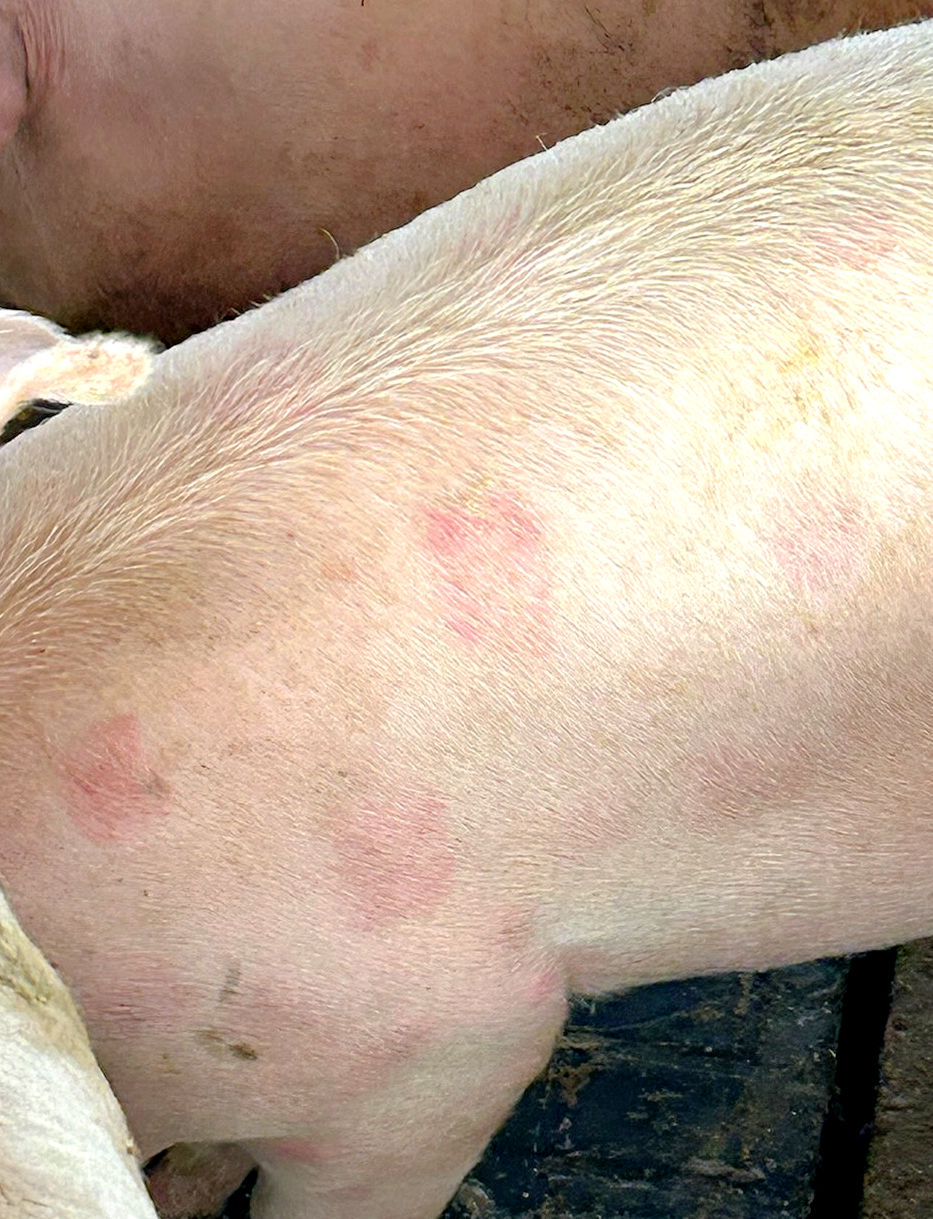
Talking with producers these days, it seems like we haven’t had too many cases of erysipelas recently. In my opinion, our industry is overdue for an erysipelas break. When we forget the challenge, we, as an industry, sometimes become complacent with our preventive measures, which can have a more significant impact when the problem arises.
Erysipelas is one of the oldest diseases recognized by hog producers. Commonly recognized for red/purple blotches on the skin, lethargy, high fever, and off-feed events. A rare symptom includes the pink diamond-shaped lesions found on the skin, depicted in the picture to the left. This infection can cause lameness, sudden death, and necrosis of lesions.
How does one contract this infection?
Typically, this infection is contracted from poor biosecurity measures. Since the disease is not aerosolized, the way erysipelas spreads is by trekking it into a farm. This infection comes from Erysipelothrix rhusiopathiae, a bacterium commonly found in feces, in the dirt outside of hog barns, or old finishing floors. While biosecurity measures have improved throughout hog production over the decades, producers still run the risk of infecting herds. Remember, just because your farm appears clean, doesn’t mean you can’t pick up ery from outside sources, such as the county fair or the ground at your local gas station.
Why is it worth it to vaccinate?
A 285-pound pig will hang a 214-pound carcass, with the summer futures being over $100.00 per cwt of carcass, which makes that pig worth $216. For less than $.20 per pig, we (the producers) can vaccinate conveniently through the water for erysipelas. Vaccinating is a simple preventative step that can protect your herd and your profit. To put this another way, for every one pig you lose to erysipelas, you could vaccinate almost 1100 head through the water. The cost of vaccinating is pennies to your overall profit when you turn your barn.
How to vaccinate for Ery:
When it comes to vaccinating for erysipelas, you can treat it alone or pair it. If you already plan to vaccinate for ileitis and salmonella, we recommend pairing an ery vaccine of the same brand, such as Arko or B.I. The industry standard for treatment is 5-10 weeks of age is the ideal stage for vaccination, typically near the end of the nursery phase or upon entering the finishing stage. The earlier you get ahead of ery, the better! This is also a seasonal disease; we recommend starting to vaccinate in early spring, as this disease thrives from spring through late fall. Additionally, if your county does not require 4-H and FFA pigs to be vaccinated, we still recommend vaccinating.
The entire swine industry works hard to get every pig to market as the number one pig in their group. Don't get caught with a set of unvaccinated pigs.
Call your Spencer Ag Center field marketer for more details regarding erysipelas prevention and treatment protocols.
National Administrative Professionals’ Day — April 22nd
We want to thank our administrative professionals: Julie, Jen, Connie, and Katelyn, for their contribution to our team!
These women are responsible for all of our record and bookkeeping and keeping our business running like a well-oiled machine—from confirming lot numbers on every product that goes out of the store and handling every customer’s bill, to recording individualized farm record-keeping for barn turns. We appreciate them greatly!

*On top of their normal duties, every bill and newsletter is printed and hand-packaged by these amazing ladies! :)
World Veterinary Day—April 25th
We want to recognize our hard-working veterinarians on staff for all of their technical support and care of our customers' herds. Especially nearing the end of the calving season, our team has worked tirelessly to help our cattle producers.
Thank you, Dr. Grace Thompson, Dr. Jack Johnson, and Dr. Ertyl, for your immense support! Your dedication to animal health is appreciated by your team at Spencer Ag Center and by all of your clients.
Research may have identified Swine Ear Necrosis Source
This widespread issue may finally have a source! Below is a summary of National Hog Farmer’s “New Research Identifies Direct Cause of Porcine Ear Necrosis” article.
What is it?
Porcine Ear Necrosis (PEN) is a painful welfare condition that results in the damage of the ear tips of swine. “PEN was first scientifically described in 1976, although it was informally reported decades before that. It is a disease that has intrigued (and frustrated) producers and veterinarians for its relatively slow progression, yet significant sequelae (ear mutilation).”
The Study:
Matthew Costa, associate professor at Western College of Veterinary Medicine at the University of Saskatchewan, shared his findings after successfully replicating porcine ear necrosis (PEN) through multiple trials.
Researchers ran three trials where animals received treatment of Staphyloccus hyicus or Fusobacterium necrophorum. Two trials were run for Fusobacterium, and one trial was run on Staph H. The treatments were inoculated intradermally into the tip of one ear, while the other ear on the same pig received the control inoculation.
Post inoculation, Costa’s research followed the herds to see which pigs would develop signs of necrosis; this took 4 to 6 days to develop. Researchers also took tissue samples from necrotic ears; these samples showed loss of skin, thick crusting, and repair tissue. The lesions documented from the trial ranged from skin reddening, scabbing, to exact PEN matches from prior field cases.
The Results:
The results of this study showed no lesion results to Staph H., which was the original suspicion among producers and researchers. Both trials of Fusobacterium resulted in PEN-like lesions. “F. necrophorum was isolated from the inoculated ears of affected pigs in both trials. In some animals, the opposite, uninoculated ear also developed lesions, suggesting possible spread via blood.”
We find this research to be fascinating news for the industry, as knowing the source is the next step in finding a lasting solution to this common industry problem.
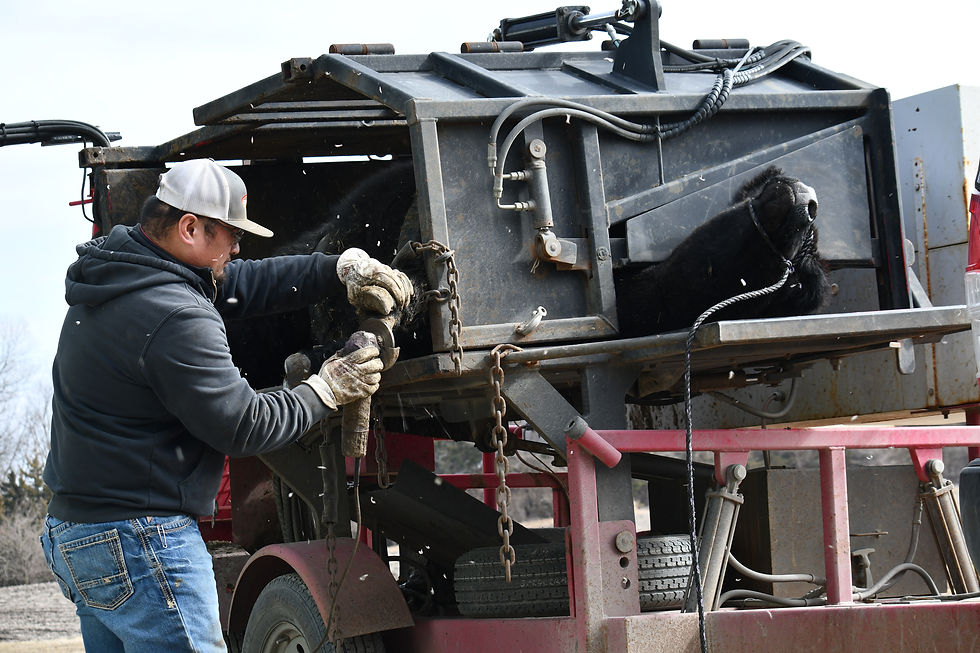
HOOF TRIMMING SERVICES
Kyle Long is trained to provide expert hoof trimming services for your herd. Be sure to reach out to your field marketer to schedule an appointment.
Why Trim?
· Helps with improving weight efficiency
· Minimizes hoof and toe injuries
· Reduces lameness and joint pain
· Helps prevent diseases like laminitis and foot rot
Improves quality of life with ease of movement
Best Time to Trim:
· Springtime after calving
· Before pasture turnout
· During BSE (Semen testing)
· Fall time during preg checking
BOOK NOW (712)262-5552


